- Empty cart.
- Continue Shopping

free of DNA contaminants, suitable for Microbiome research, ?2000?units/mg protein, lyophilized powder
Synonym(s):
(1,3)-?-D-Glucan endohydrolase, 1,3-?-Glucan glucohydrolase
bacterial (Arthrobacter luteus)
lyophilized powder
?2000?units/mg protein
DNA free
dry ice
?20?C
Yeast cells are difficult to disrupt because the cell walls may form capsules or resistant spores. DNA can be extracted from yeast by using lysing enzymes such as lyticase, chitinase, zymolase, and gluculase to induce partial spheroplast formation; spheroplasts are subsequently lysed to release DNA. Lyticase is preferred to digest cell walls of yeast and generate spheroplasts from fungi for transformation.
Reported to be useful for lysis of Ashbya, Candida, Debaryomyces, Eremothecium, Endomyces, Hansenula, Hanseniaspora, Kloeckera, Kluyveromyces, Lipomyces, Metschikowia, Pichia, Pullularia, Torulopsis, Saccharomyces, Saccharomycopsis, Saccharomycodes, and Schwanniomyces species.
Purified Lyticase SAE0098 undergoes strict quality control testing to ensure the absence of detectable levels of contaminating DNA using 35 cycles PCR amplification of 16S and 18S rDNA using universal primer sets.
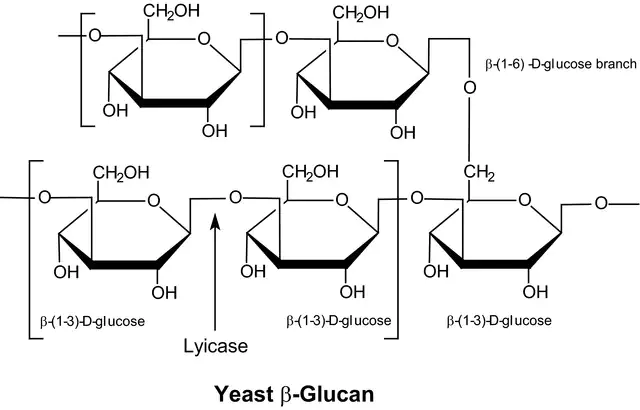
Lyticase hydrolyzes poly-?(1?3)-glucose such as yeast cell wall glucan.
One unit will produce a ?A800?of 0.001 per min at pH 7.5 at 25 ?C, using a suspension of yeast as substrate in a 3 mL reaction mixture.
Danger
P261 – P284 – P304 + P340 – P342 + P311 – P501
Resp. Sens. 1
13 – Non Combustible Solids
WGK 3
Not applicable
Not applicable