- Empty cart.
- Continue Shopping




puriss. p.a., ACS reagent, reag. Ph. Eur., 99.0-100.5%
Synonym(s):
Hydroxybenzene
ACS reagent
puriss. p.a.
200
reag. Ph. Eur.
3.24 (vs air)
0.09 psi ( 55 ?C)
0.36 mmHg ( 20 ?C)
99.0-100.5%
99.5-100.5% (GC)
solid
1319??F
8.6?%
?0.001% heavy metals (as Pb)
?0.01% non-volatile matter
?0.05% m-cresol (GC)
?0.05% o-cresol (GC)
?0.05% p-cresol (GC)
?0.2% water (Karl Fischer)
180-181??C
182??C (lit.)
40-42??C (lit.)
solidification point ?40.5??C
1.071?g/mL?at 25??C (lit.)
chloride (Cl–): ?5?mg/kg
Fe: ?1?mg/kg
Oc1ccccc1
1S/C6H6O/c7-6-4-2-1-3-5-6/h1-5,7H
ISWSIDIOOBJBQZ-UHFFFAOYSA-N
human …?GABRA1(2554)
Oxidation of phenol at synthetic boron-doped diamond thin film electrode (BDD) in perchloric acid medium has been proposed.?Mechanism of its oxidation to afford oxygen at doped SnO2?coated titanium anodes has been investigated.?Various industrial processes for the synthesis of phenol have been described.
Phenol may be used in the preparation of phenol reagents which participates in the Berthelot color reaction for the quantification of ammonia.?It may be used in the preparation of cresols, via Friedel-Crafts alkylation reaction.
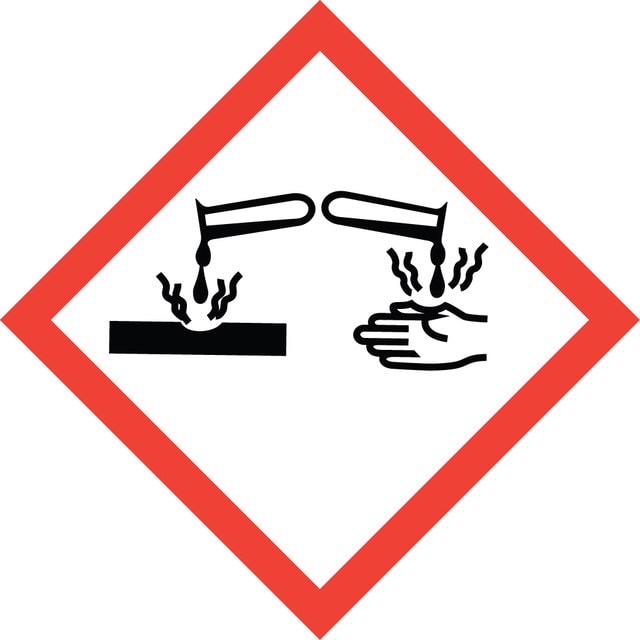
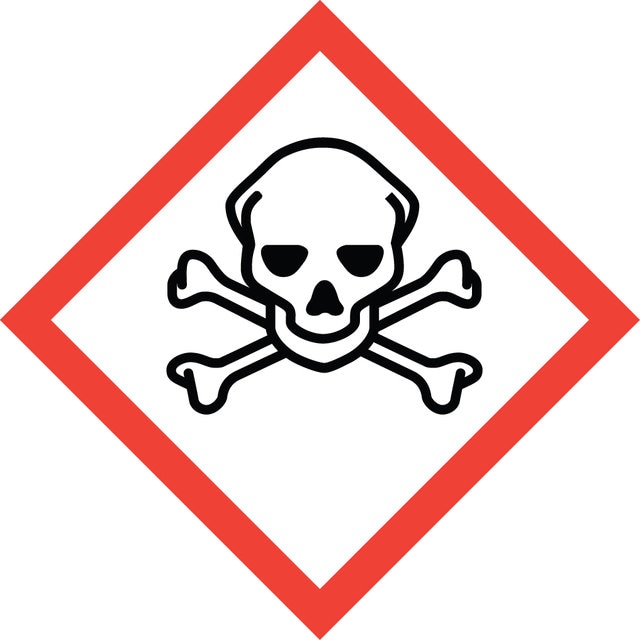
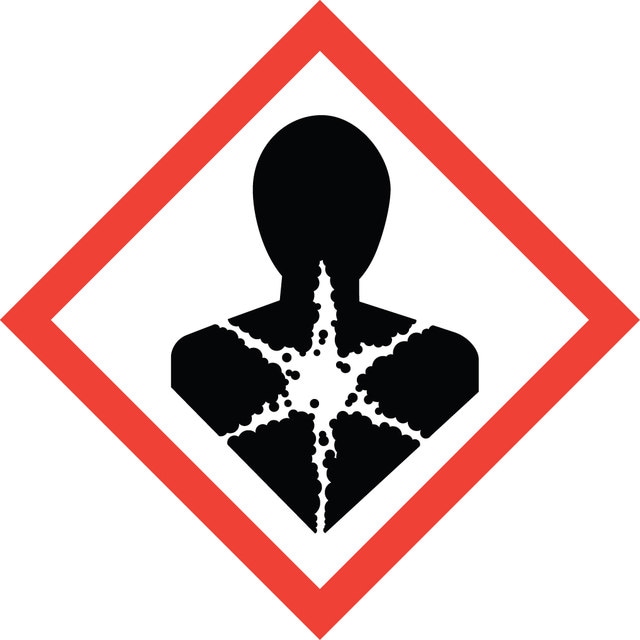
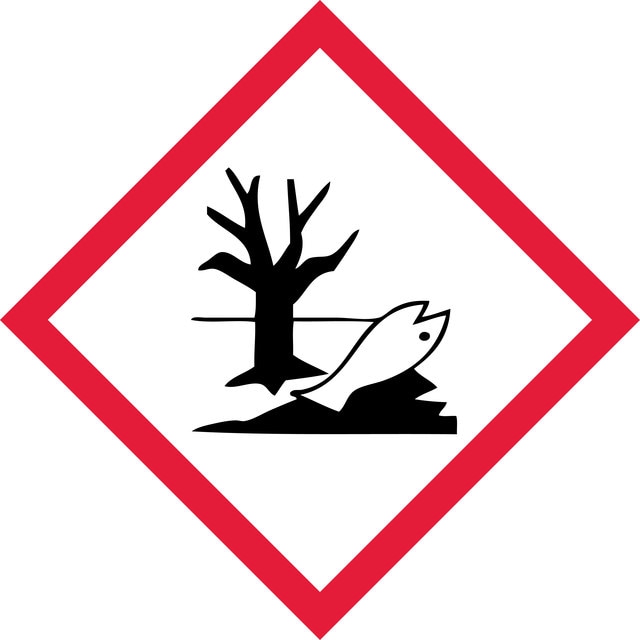 GHS05,GHS06,GHS08,GHS09
Danger
H301 + H311 + H331 – H314 – H341 – H373 – H411
P260 – P273 – P280 – P303 + P361 + P353 – P304 + P340 + P310 – P305 + P351 + P338
Acute Tox. 3 Dermal – Acute Tox. 3 Inhalation – Acute Tox. 3 Oral – Aquatic Chronic 2 – Eye Dam. 1 – Muta. 2 – Skin Corr. 1B – STOT RE 2
6.1A – Combustible, acute toxic Cat. 1 and 2 / very toxic hazardous materials
WGK 2
177.8 ?F – closed cup
81 ?C – closed cup